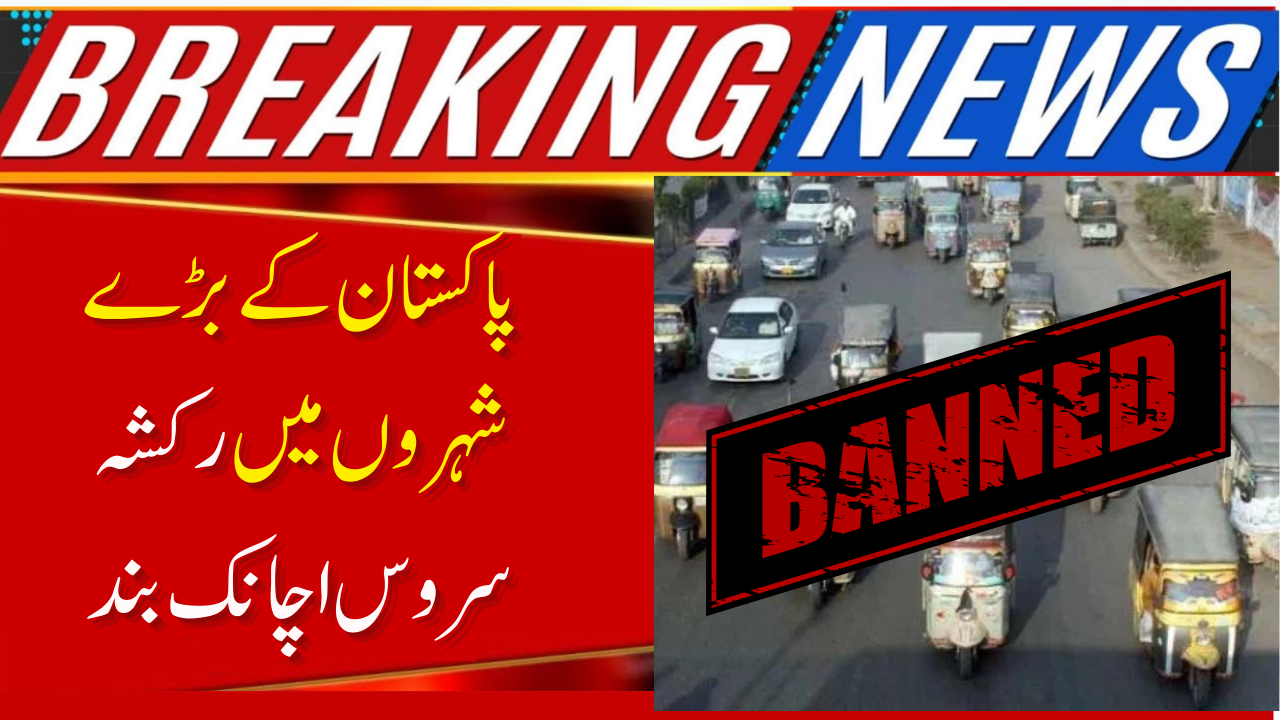
Karachi is once again taking bold steps to tackle its worsening traffic problem. The Karachi rickshaw ban has now been extended to cover 26 major roads, affecting both two-seater and four-seater rickshaws. This move aims to reduce congestion and improve overall traffic flow across Pakistan’s busiest metropolis.
Why Karachi Expanded the Rickshaw Ban

Traffic congestion has been a persistent problem in Karachi, causing frustration for commuters and slowing down economic activity. In response, the Karachi administration decided to enforce stricter measures. According to Karachi Commissioner Syed Hasan Naqvi, the extension of the rickshaw ban followed recommendations from Deputy Inspector General (DIG) Traffic Peer Muhammad Shah.
The administration has implemented this under Section 144 of the Criminal Procedure Code (CrPC), giving legal backing to restrict rickshaw movement on high-traffic roads. Previously, 20 major roads were already under restriction, but the expansion now covers six additional major arteries.

Roads Affected by the Rickshaw Ban in Karachi
The rickshaw ban now applies to the following 26 major roads:
- Shahrah-e-Faisal
- II Chundrigar Road
- Shahrah-e-Quaideen
- Shershah Suri Road
- Shaheed-e-Millat Road
- Abdullah Haroon Road to Do Talwar
- Shahrah-e-Firdousi
- Stadium Road
- Sir Shah Suleman Road
- Rashid Minhas Road
- Mauripur Road
- Shahrah-e-Pakistan
- Hub River Road
- Quaidabad to Landhi 89
- University Road
- Korangi Road from FTC to Qayyumabad
- Korangi Road from Qayyumabad to Korangi Crossing
- Orangi Road
- Super Highway to Malir Halt
- Surjani to Sohrab Goth
These routes are among Karachi’s busiest, and officials believe that restricting rickshaw access will enhance traffic movement significantly.
Impact on Commuters and Public Transport
The extended Karachi rickshaw ban has mixed reactions among daily commuters. While some people appreciate smoother traffic and faster travel times, rickshaw drivers and passengers are adjusting to alternative transport options. Local authorities have emphasized that public buses, ride-hailing services, and other transport modes can still operate freely, offering reliable alternatives.
Additionally, the ban is part of a larger strategy to improve overall urban mobility. The Sindh government has simultaneously introduced:

- A daytime ban on heavy vehicles on key routes
- A 30 km/h speed limit for heavy transport vehicles (HTVs)
These measures aim to complement the rickshaw restrictions and ensure free-flowing traffic during peak hours.
Why Traffic Congestion Remains a Challenge in Karachi
Karachi’s traffic problem is not new. With a population exceeding 20 million, the city’s roads are under constant pressure. The rise of informal transport modes like rickshaws has added to congestion, especially on major commercial and arterial roads.
Experts argue that without consistent enforcement and alternative transport solutions, traffic jams will persist. The government’s step to extend the rickshaw ban reflects an urgent need to prioritize commuter safety, reduce pollution, and streamline urban transport infrastructure.
Alternatives for Rickshaw Passengers
For daily commuters affected by the Karachi rickshaw ban, several alternatives exist:

- Ride-Hailing Services: Apps like Careem and Uber provide convenient transport along major routes.
- City Buses: Expanded public bus routes now cover previously congested roads.
- Motorcycle Taxis: These can navigate narrow streets where rickshaws were previously common.
- Carpooling: Encouraged by authorities to reduce the number of vehicles on the road.
Authorities urge passengers to plan their routes in advance and avoid restricted roads during peak hours.
Government’s Vision for Karachi Traffic
The Sindh government’s strategy extends beyond just banning rickshaws. The aim is to:
- Reduce traffic congestion in key commercial zones
- Enhance safety for motorists and pedestrians
- Promote public transport usage
- Minimize road accidents caused by heavy congestion
By gradually introducing these restrictions and supporting measures, the administration hopes to transform Karachi’s chaotic traffic environment into a more organized, commuter-friendly city.
Conclusion
The Karachi rickshaw ban is a significant step toward improving urban mobility in one of the world’s busiest cities. While it presents challenges for rickshaw operators and passengers, it promises faster travel times, reduced congestion, and a safer commuting experience. With effective enforcement and public cooperation, Karachi can look forward to smoother roads and a more efficient transport system.